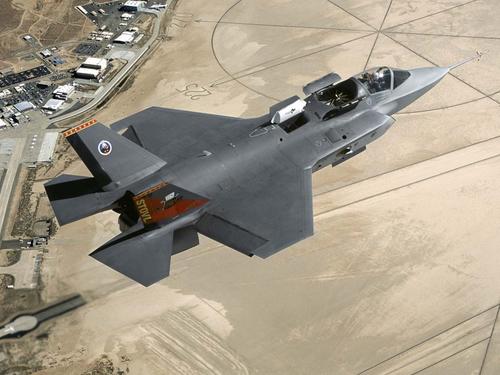
STOVL IS AN ACRONYM FOR....
"SHORT
TAKE OFF AND VERTICAL LANDING"
This is the ability of some aircraft to take off from a short runway or take off vertically if it does not have a very heavy payload and land vertically (i.e. with no runway). The formal NATO definition (since 1991) is: A Short Take-Off and Vertical Landing aircraft (aéronef à décollage court et atterrissage vertical) is a fixed-wing aircraft capable of clearing a 15 m (50 ft) obstacle within 450 m (1500 ft) of commencing take-off run, and capable of landing vertically.
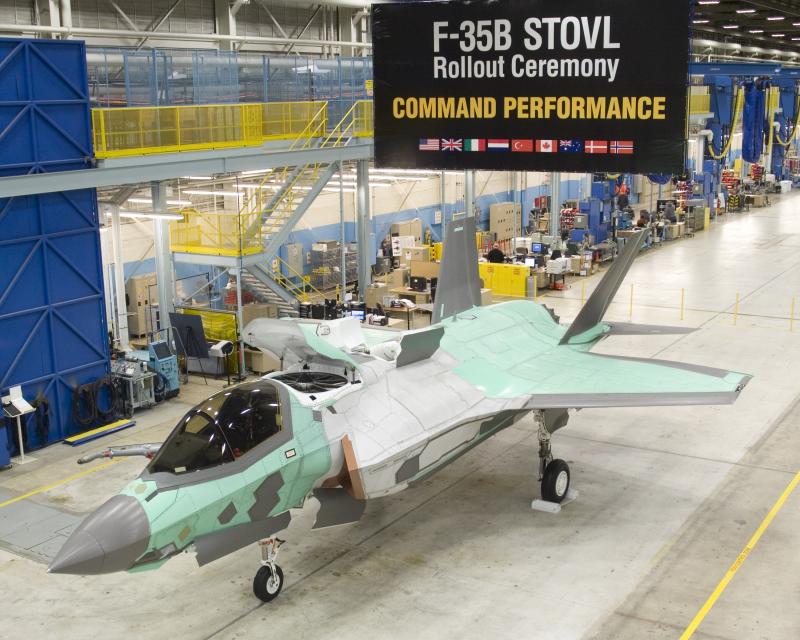
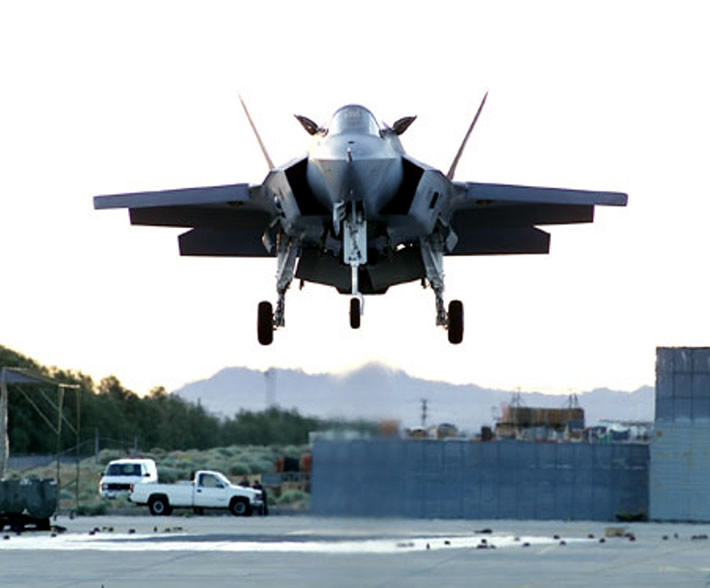
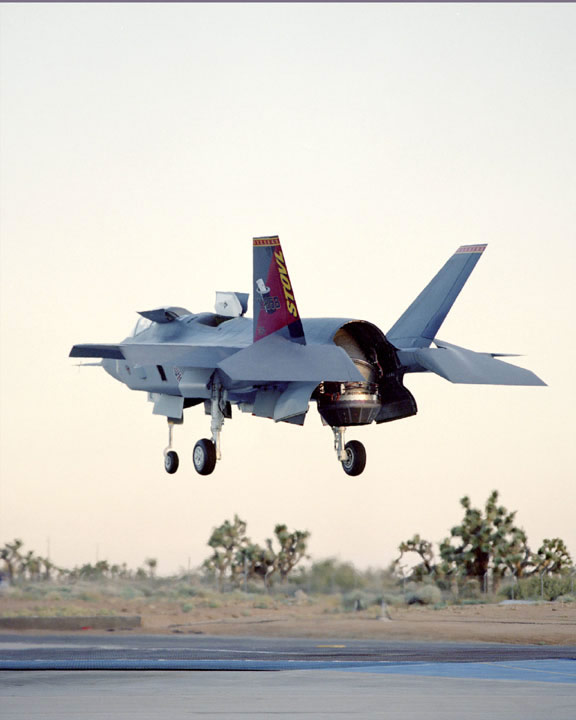
This is often accomplished on aircraft carriers through the use of "ski-jump" runways, instead of the conventional catapult system. STOVL use tends to allow aircraft to carry a larger payload as compared to during VTOL use, while still only requiring a short runway. The most famous example is probably the Hawker Siddeley Harrier Jump Jet, which though technically a VTOL aircraft, is operationally a STOVL aircraft due to the extra weight it carries at take off for fuel and armaments. The same is true of the F-35B Lightning II, which demonstrated VTOL capability in test flights but is operationally STOVL.
In 1951, the Lockheed XFV-1 and the Convair XFY tailsitters were both designed around the Allison YT40 turboprop engine driving contra-rotating propellers.
The British Hawker P.1127 took off vertically in 1960, and demonstrated conventional take off in 1961. By 1964 the first development aircraft the Kestrel were flying.
In 1962, Lockheed built the XV-4 Hummingbird for the U.S. Army. It sought to "augment" available thrust by injecting the engine exhaust into an ejector pump in the fuselage. First flying vertically in 1963, it suffered a fatal crash in 1964. It was converted into the XV-4B Hummingbird for the U.S. Air Force as a testbed for separate, vertically mounted lift engines, similar to those used in the Yak-38 Forger. That plane flew and later crashed in 1969. The Ryan XV-5 Vertifan, which was also built for the U.S. Army at the same time as the Hummingbird, experimented with gas driven lift fans. That plane used fans in the nose and each wing, covered by doors which resembled half garbage can lids when raised. However, it crashed twice, and proved to generate a disappointing amount of lift, and was difficult to transition to horizontal flight. Of dozens of VTOL and V/STOL designs tried from the 1950s to 1980s, only the subsonic Hawker Siddeley Harrier and Yak-38 Forger reached operational status, with the Forger being withdrawn after the fall of the Soviet Union.
Boeing had studied another odd-looking supersonic fighter in the 1960s which never made it beyond photos in Aviation Week. Rockwell International built, and then abandoned, the Rockwell XFV-12 supersonic fighter which had an unusual wing which opened up like window blinds to create an ejector pump for vertical flight. It never generated enough lift to get off the ground despite developing 20,000 lbf of thrust. The French had a nominally Mach 2 Dassault Mirage IIIV fitted with no less than 8 lift engines that flew (and crashed), but did not have enough space for fuel or payload for combat missions. The German EWR VJ 101 used swiveling engines mounted on the wingtips with fuselage mounted lift engines, and the VJ 101C X1 reached supersonic flight (Mach 1.08) on Juli 29th, 1964. The supersonic Hawker Siddeley P.1154 was cancelled even as the aircraft were being built.
The experimental Mach 1.7 Yakovlev Yak-141 did not find an operational customer, but it was the first to use a rotating rear main nozzle like the F-35B.
Other examples include:
EWR VJ 101C (Germany)
Dassault Mirage IIIV (France)
Yakovlev Yak-38 (USSR)
Yakovlev Yak-141 (USSR)
Except for the Yak-38, none of these has reached operational status, though the F-35 Lightning II is expected to enter service by 2011.
|